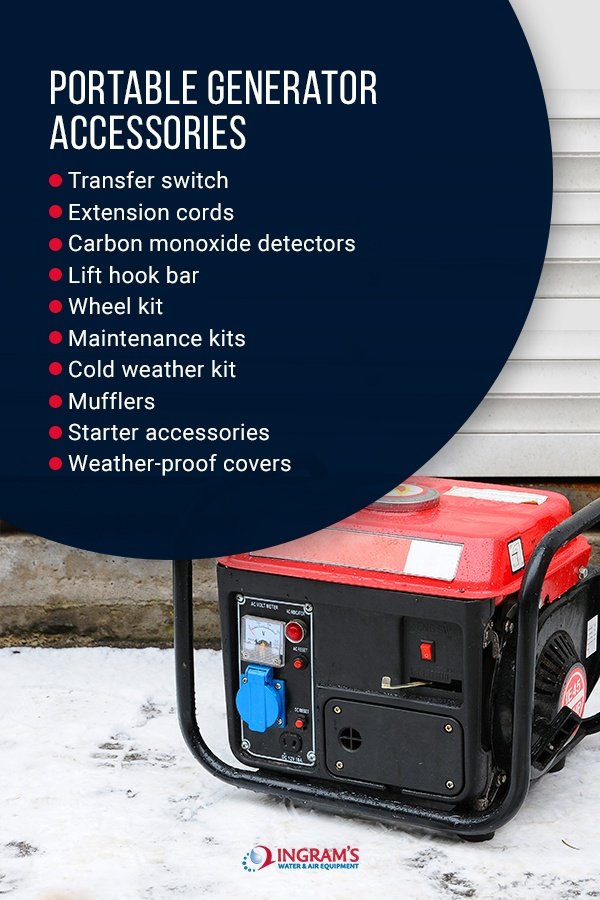
Imagine the lights flicker, then plunge your home into darkness. Or perhaps you're off-grid, enjoying the great outdoors, and need reliable power for your RV. In moments like these, a portable generator is a lifeline. But the generator itself is just the starting point. To truly unlock its potential—to make it safer, more efficient, and easier to use—you need the right gear. Beyond the engine and the outlets, essential portable generator accessories are what transform a raw power source into a seamless, dependable solution.
This isn't about buying every gadget on the market. It's about strategic additions that enhance safety, prolong your generator's life, and make power outages or outdoor adventures far less stressful. Let's dig into the must-haves that separate a smart operator from someone just hoping for the best.
At a Glance: Your Generator Accessory Checklist
- Heavy-Duty Extension Cords & Adapters: Essential for safe distance and diverse connections.
- Transfer Switch: The gold standard for safe home backup power.
- Bonding Plug (Edison Plug): A crucial safety device for floating neutral generators.
- Protective Covers: Shield your investment from the elements.
- Maintenance Kit & Fuel Stabilizer: Keep your engine running smoothly for years.
- Wheel Kits & Handles: Make moving heavy generators a breeze.
- Remote Starter: Convenient and safer operation from a distance.
- Parallel Kit: Double your power with compatible inverter generators.
- Clamp Meter: Accurately measure power draw for smart load management.
- Cold Weather Kit: Ensures reliable starts in freezing temperatures.
- The Big No-No's: Avoid fuel conversion kits, modified mufflers, and any attempt to run indoors.
The Absolute Foundation: Safety & Connectivity
Before you even think about starting your generator, you need to ensure it can connect safely to your devices and, if necessary, your home. This category isn't just about convenience; it's about preventing electrical hazards, carbon monoxide poisoning, and damage to your equipment.
Heavy-Duty Extension Cords & Adapters: Bridging the Gap Safely
You’ve heard it before: never run a generator indoors. This means you need to place it at least 20 feet away from your home, with the exhaust pointing away from any windows or doors. How do you get power from there to your fridge? Enter heavy-duty extension cords and adapter cords.
- Why they're essential: These cords facilitate connecting various devices and appliances, extending your reach to maintain that crucial safe distance. They also help reduce clutter and the risk of tripping over numerous smaller cords.
- Key considerations:
- Gauge: Look for heavy-duty cords (typically 10-12 gauge, depending on amperage) to handle the load without overheating. Thicker wires (lower gauge number) mean less resistance and safer power delivery.
- Amperage Rating: Match the cord's amperage rating to your generator's output and the devices you'll be powering. Common ratings include 15, 20, and 30 amps.
- Length: Cords come in various lengths, up to 100 feet. Choose a length that allows for safe generator placement without excessive slack.
- Plug Types: Generators have different outlet types (e.g., L5-30P, L14-30P). Adapters allow you to convert these to standard household outlets (e.g., TT-30R for RVs) or other specialized connections. Always ensure compatibility.
- Cost: Adapters usually run around $20, while heavy-duty extension cords can range from $50 to $200, depending on length and gauge.
Pro Tip: Always uncoil extension cords fully before use to prevent heat buildup, which can melt insulation and cause a fire.
Transfer Switches: Your Home's Safe Connection
If your primary goal is to provide backup power to your home, a transfer switch is not merely an accessory—it's a critical safety device and, often, a legal requirement.
- Why it's essential: A transfer switch connects your portable generator directly to your home's electrical panel. This allows you to safely power select circuits (like your refrigerator, furnace, or essential lights) from your generator. Crucially, it prevents "backfeeding"—the dangerous act of sending electricity back into the utility grid, which can electrocute utility workers.
- Types:
- Manual Transfer Switches (MTS): These are user-operated. When the power goes out, you manually start your generator, plug it into an outdoor inlet box, and then flip switches on the transfer panel to select which home circuits receive generator power.
- Automatic Transfer Switches (ATS): While common for whole-home standby generators, most portable generators do not support automatic startup with an ATS. This means even with an ATS, you'll likely still need to manually start your portable generator.
- Cost: A basic 30-amp manual transfer switch, including installation, can cost several hundred dollars. Professional installation by a licensed electrician is non-negotiable for safety and compliance with electrical codes.
Important: Never attempt to backfeed your home by plugging a generator directly into a wall outlet. This is extremely dangerous and can be fatal for utility workers or anyone interacting with the grid.
Bonding Plugs (Edison Plugs): The Invisible Safety Net
This small, often overlooked accessory can be a significant safety upgrade for many portable generators.
- Why it's essential: Many portable generators come with a "floating neutral" design, meaning the neutral wire is not internally bonded to the generator's frame (ground). While safe for directly plugged-in tools, this floating neutral can cause issues with GFCI (Ground Fault Circuit Interrupter) outlets and might not meet National Electrical Code (NEC) requirements for certain applications, like powering a home via a transfer switch, where a neutral-to-ground bond is expected. A bonding plug creates this essential bond, preventing dangerous voltage differences and ensuring GFCI outlets function correctly, reducing shock hazards.
- How it works: It's a simple plug-and-play device that you insert into one of your generator's 120V outlets. Inside, a wire connects the neutral pin to the ground pin, establishing the necessary bond.
- Cost: Around $20. A small price for a big safety boost.
When do you need one? If your generator's manual indicates a floating neutral, and you plan to connect it to a transfer switch, use it with GFCI-protected circuits, or use it for specific RV applications, a bonding plug is highly recommended.
Mobility & Convenience: Making Life Easier
Generators can be heavy, noisy, and sometimes tricky to operate in less-than-ideal conditions. These accessories address those pain points, improving your overall experience.
Wheel Kits & Lifting/Hanger Kits: Move Your Power Source
Unless you have a micro-inverter generator, portable generators can be incredibly heavy, often exceeding 100 pounds.
- Why they're essential: Wheel kits include attachable wheels (2-4) and often a folding handle, drastically improving horizontal transportability. Moving a generator across a yard or to a storage shed becomes a simple push or pull instead of a back-breaking lift. For generators over 110 lbs, wheel kits are practically mandatory.
- Key considerations:
- Wheel Size: Larger wheels are better for navigating rough terrain, gravel, or uneven ground.
- Handle Design: A sturdy, comfortable folding handle makes transport much easier and saves storage space.
- Lifting Kits and Hanger Kits: These consist of steel crossbars that attach to the generator frame, providing secure points for crane or hoist transport. Useful for commercial applications or moving generators to elevated positions.
- Cost: Wheel kits typically range from $30-$150. Lifting/hanger kits are generally $20-$50. Many larger generators include a wheel kit as standard.
Remote Starters: Power at Your Fingertips
Fumbling with a pull cord in the rain or dark is no one's idea of fun. Remote starters offer a safer, more user-friendly way to get your generator going.
- Why they're essential: These allow you to start your generator remotely via wired controls, wireless remotes, or even smartphone integration (for advanced models). This means you don't have to venture outside in harsh weather, darkness, or potentially dangerous conditions to get your power back.
- Key considerations:
- Built-in vs. Aftermarket: Some higher-end generators come with remote start capabilities built-in. For electric-start models without this feature, aftermarket kits are available.
- Compatibility: Ensure any aftermarket kit is specifically designed for your generator model. Third-party options may void your warranty.
- Range: Wireless remote starters offer varying ranges; consider how far you'll typically be from the generator.
- Cost: Kits for electric-start models can range from $200-$500+.
Protecting Your Investment & Ensuring Longevity
A portable generator is a significant investment. Keeping it protected from the elements and ensuring its engine receives proper care will guarantee it’s ready when you need it most.
Protective Covers: Shield Against the Elements
Just like your car, your generator needs protection from dust, rain, and snow—especially if it sits unused for extended periods.
- Why they're essential: Covers prevent dust buildup in the engine, keep moisture out of sensitive electrical components, and protect the fuel tank from dirt.
- Types:
- Storage Covers: These are lighter-duty, typically made of vinyl or polyester, and designed to protect the generator from dust and light moisture during storage. They usually cost $10-$30. Crucially, do not use storage covers during operation or expose them to bad weather outdoors.
- Storm/Running Covers: These are heavy-duty, water-resistant covers designed to allow generator operation even in rain or snow. They feature a sturdy backbone or frame that keeps the cover elevated, allowing for ventilation and exhaust clearance while shielding the top and sides. These are invaluable for extended outages.
- Cost: Storm/running covers are more substantial, ranging from $150-$200.
Maintenance Kits & Accessories: The Lifeblood of Your Engine
Regular maintenance is paramount for any internal combustion engine. Generator maintenance kits simplify this process.
- Why they're essential: These kits typically include critical items like air filters, spark plugs, and oil funnels—all designed to keep your generator running at peak performance and extend its lifespan. Neglecting maintenance can lead to hard starting, reduced power output, and premature engine failure.
- Key Accessories within Maintenance:
- Fuel Stabilizers: Absolutely essential if you don't completely drain your fuel tank after each use. Modern gasoline can degrade rapidly, forming gum and varnish that clog carburetors and fuel lines. A fuel stabilizer prevents this, protecting the carburetor and extending the generator's lifetime.
- Magnetic Oil Dipsticks: Small engines, especially those on portable generators, typically don't have oil filters. A magnetic oil dipstick (around $15-$20) captures tiny metallic shavings that naturally occur from engine wear, preventing them from recirculating and causing further abrasion. This simple addition can significantly reduce engine wear.
- Vibration-activated Hour Meters: Many basic generators lack a built-in hour meter. These inexpensive ($15) devices attach to the generator and track engine runtime, helping you adhere to manufacturer-recommended maintenance schedules (e.g., oil changes every 50 hours).
Remember: Always follow your generator's specific maintenance schedule outlined in its owner's manual.
Optimizing Performance & Adapting to Conditions
Once you've covered the basics of safety and protection, these accessories help you get the most out of your generator, whether you need more power, longer runtimes, or reliable operation in extreme weather.
Parallel Kits: Doubling Your Inverter Power
Inverter generators are prized for their clean power and quiet operation. A parallel kit lets you combine the power of two of them.
- Why they're essential: Parallel kits connect two compatible inverter generators, effectively combining their power output. This gives you increased available wattage while maintaining the portability, quiet operation, and clean sine wave output (safe for sensitive electronics) that inverters are known for. It's often more fuel-efficient to run two smaller generators in parallel than one large, less efficient conventional generator for the same load.
- How it works: These are plug-and-play kits that include circuit protection and load balancing, ensuring both generators work together seamlessly.
- Considerations: Only specific models from the same manufacturer are designed to be run in parallel. Always check your generator's manual for compatibility. The combined output will be limited by the parallel kit's specifications.
- Cost: Typically $50-$100.
Load Management Modules: Smarter Power Distribution
Even with a well-sized generator, you might occasionally face situations where demand temporarily exceeds capacity.
- Why they're essential: These modules help you run more appliances with a smaller generator by prioritizing and distributing power intelligently. They connect to specific circuits, monitor their consumption, and temporarily disconnect lower-priority loads (e.g., a water heater) when overall demand approaches the generator's capacity, preventing overloading and frustrating circuit trips.
- Advanced Features: Some models offer smartphone integration, allowing you to monitor and manage loads remotely.
- Benefit: Maximizes the utility of your existing generator, saving you from needing to purchase a larger, more expensive unit.
Extended-Run Fuel Tanks/Systems: Power Through the Night
Fueling up every few hours during a long outage can be a hassle. Extended-run fuel systems offer a solution.
- Why they're essential: These systems significantly increase your generator's fuel capacity, allowing for much longer runtimes without interruption. This is especially useful during extended outages or for RVers who rely on their generator for continuous power.
- Types:
- Gravity Feed: The simplest method, where a larger auxiliary tank is placed higher than the generator, allowing fuel to flow naturally.
- Pump Systems: These use a pump to draw fuel from a larger tank, which can be placed at the same level or even below the generator.
- Considerations: While convenient, pump systems or modifications to the generator's fuel system can potentially void your warranty. Always research compatibility and potential risks.
- Cost: $100+ for tanks and associated hardware.
Cold Weather Kits & Altitude Kits: Conquering the Extremes
Generators, like any engine, can struggle in extreme conditions. These kits help them perform reliably.
- Cold Weather Kits:
- Why they're essential: Freezing temperatures can cause issues like battery drain, thickened oil, and condensed water freezing in the crankcase breather tube. Cold weather kits prevent these problems.
- Components: They typically include battery warmers, oil heaters, insulated covers, and sometimes specialized fuel additives (for diesel generators) and thermostatic controls to maintain optimal operating temperatures.
- Cost: $100-$300.
- Altitude Kits:
- Why they're essential: Internal combustion engines lose power at higher altitudes due to thinner air. An altitude kit adjusts the carburetor's fuel-air mixture with different jets to compensate, ensuring efficient combustion and preventing overly rich running conditions that can foul spark plugs and reduce power.
- Considerations: While inexpensive (a few dollars for jets), this is a modification that may void your warranty. Always consult your generator's manual and the manufacturer before making such changes. Generally recommended for elevations above 2000 feet.
Advanced Monitoring & The Future
Staying informed about your generator's performance helps with planning and efficiency.
Clamp Meters: Your Diagnostic Partner
Understanding how much power your appliances draw is key to smart load management.
- Why they're essential: A clamp meter ($50) is a versatile electrical tool that allows you to safely measure output (amps, voltage, wattage) at generator sockets and, more importantly, the actual consumption of individual appliances. This helps you accurately determine the "starting watts" and "running watts" of your devices, making it easier to size your generator correctly and manage your loads during an outage.
- Benefit: Prevents overloading your generator and helps you prioritize which appliances to run, maximizing your available power.
Smart Monitoring Systems (Anticipated): The IoT Revolution
While largely a future innovation, smart monitoring is on the horizon for portable generators.
- What to expect: These systems integrate IoT (Internet of Things) technology to allow users to manage schedules, monitor fuel consumption, and track power output via smartphones.
- Benefits: Real-time insights, remote control, automatic load balancing, fuel efficiency tracking, and proactive maintenance alerts will make generator ownership more seamless and efficient than ever before. Expect these to become more common around 2025 and beyond.
The Absolute No-Gos: Accessories That Are Dangerous or Detrimental
Just as there are essential accessories, there are items or practices you should never consider. These can be dangerous, void your warranty, or severely damage your generator.
- Third-party Fuel Conversion Kits: These kits promise to convert your gasoline generator to run on propane or natural gas. While appealing for fuel flexibility, they often violate manufacturer warranties, emission regulations, and can significantly decrease performance and cause long-term engine damage. Stick to what your generator was designed for.
- Third-party Silencers/Mufflers Requiring Exhaust Modification: While reducing noise is tempting, modifying your generator's exhaust system with aftermarket silencers can restrict exhaust flow. This can lead to overheating, reduced power, and engine damage, all while likely voiding your warranty. If noise is a concern, look into compatible OEM mufflers or consider a quiet box enclosure (which offers noise reduction and element protection without exhaust modification).
- Exhaust Extensions for Indoor Use: This is not just "not recommended"—it's a deadly practice. Any accessory that suggests or enables running a generator indoors, even with an exhaust extension, is extremely dangerous and will lead to carbon monoxide poisoning. Generators must always be run outdoors, at least 20 feet from any building, with exhaust pointed away from windows and doors. No exceptions. No excuses.
Making Smart Choices for Your Generator
Choosing the right portable generator accessories isn't just about accumulating more gear; it's about making your power solution more reliable, safer, and easier to use. Always prioritize official manufacturer accessories when possible to ensure compatibility, safety, and to preserve your warranty. While third-party options exist, they may void warranties or lack the same guarantees.
By investing wisely in these essential items—from the basic safety of heavy-duty cords and a bonding plug, to the convenience of a remote start or the performance boost of a parallel kit—you transform your portable generator from a simple machine into a powerful, dependable ally, ready to serve you when you need it most. And if you're still weighing your options for the primary unit, you might find our Harbor Freight portable generator guide a useful resource to get started. Stay safe, stay powered.